



















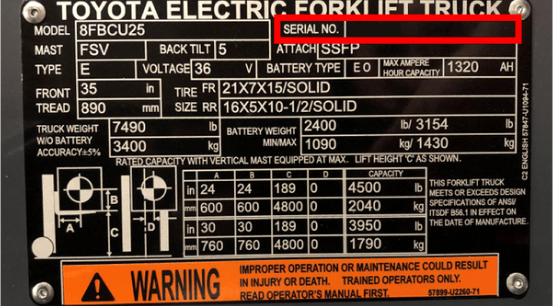
How to Find Your Equipment Model Number.
Finding the right parts for your equipment is easy when you have your model and serial number which can be found on the data plate. Luckily, a forklift data plate is installed on every truck on the market to help you understand what your forklift can do and provide vital information.
Model Number: The model number of your toyota forklift is extremely important for relaying information to your dealers about repair or technical assistance and for looking up replacements part!
Serial Number: The serial number on your lift is the most important number.The model serial number combination will allow us to provide you with the parts that will fit your particular piece of equipment.
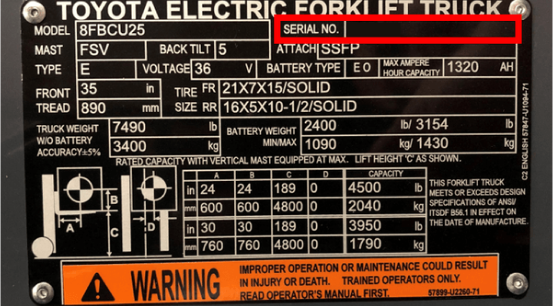
How to Find Your Equipment Serial Number.
Finding the right parts for your equipment is easy when you have your model and serial number which can be found on the data plate. Luckily, a forklift data plate is installed on every truck on the market to help you understand what your forklift can do and provide vital information.
Model Number: The model number of your toyota forklift is extremely important for relaying information to your dealers about repair or technical assistance and for looking up replacements part!
Serial Number: The serial number on your lift is the most important number.The model serial number combination will allow us to provide you with the parts that will fit your particular piece of equipment.
Need some help? For further assistance or more information, contact your local Toyota Dealer.











Please click below to sign in to your MyToyota account
Don't have an account?
Diesel Forklift Refueling: Operational Considerations and General Best Practices

Refueling a diesel forklift is a routine part of many operations—but it’s also an area where consistency, training, and regulatory awareness matter. While diesel equipment is known for durability and long run times, inconsistent or improper refueling practices may contribute to operational issues, equipment concerns, or potential regulatory considerations.
This guide provides general operational considerations related to diesel forklift refueling practices.
Consider Applicable OSHA and Local Requirements for Diesel Forklift Refueling
Follow OSHA and Local Regulations
While OSHA does not have a single standard dedicated exclusively to diesel forklift refueling, certain requirements may apply depending on the operation, facility, and jurisdiction, , including considerations related to:
- Handling and storage considerations for flammable and combustible liquids
- Spill prevention and response considerations
- Use of appropriate containers and dispensing equipment, as applicable
Additionally, state and local environmental agencies may have requirements related to fuel storage, secondary containment, and reporting spills.
Tip: Operations may wish to review site-specific practices and applicable federal, state, and local requirements.
Designated Refueling Areas & Personnel Considerations
Refueling diesel lift trucks is commonly conducted in clearly defined areas that are:
- Well-ventilated (especially if near indoor/outdoor thresholds)
- Reasonably separated from potential ignition sources
- Supported by access to spill response kits and absorbent materials
- Subject to access controls where appropriate for the operation. Establishing designated zones helps standardize the process and makes it easier to train operators consistently.
Fuel Storage and Handling Considerations
Diesel fuel is typically stored and handled using equipment intended for such use, which may include:
- UL-listed or otherwise appropriate fuel tanks and containers
- Appropriately identified storage systems
- Secondary containment where required
- Storage practices intended to limit unauthorized access
Periodic inspection of tanks, hoses, and pumps may assist in identifying wear or potential leaks.
Common Diesel Forklift Refueling Practices
Turn Off the Equipment
Before refueling a diesel forklift:
- Shut off the engine
- Park the forklift on a stable surface
- Engage the parking brake
These practices may help reduce the likelihood of fuel movement or accidental operation during refueling.
Avoid Overfilling
Overfilling a diesel tank may contribute to spills and unnecessary cleanup. Instead:
- Follow applicable equipment guidance regarding fill levels
- Allow space for fuel expansion
- Monitor fueling activities during the process
Consistent fueling practices may support equipment performance and operational consistency.
Spill Response Considerations Immediately
Diesel spills may require response actions depending on site practices and applicable requirements, including:
- Use absorbent materials or spill kits
- Dispose of impacted materials in accordance with applicable requirements
- Evaluate whether notification or reporting obligations apply. Having spill response procedures in place supports environmental compliance and operational cleanliness.
Operator Training Considerations
Operations may consider training personnel involved in refueling activities on topics such as:
- Site-specific refueling procedures
- Proper use of fueling equipment
- Spill response protocols
- Relevant compliance requirements
Periodic refresher training may assist with operational consistency.
A documented refueling approach may assist operations in promoting consistency and supporting internal procedures for diesel lift truck refueling. Operational practices, equipment configurations, and regulatory considerations may vary by facility and jurisdiction, and businesses should evaluate practices based on their specific operations and applicable requirements.